
The four rooms
- TK and KMrs. Brennan ButhTransitional kindergarten and kindergarten
- Grades 1 and 2Mrs. Jenny ManginiFirst and second grade
- Grades 3 to 5Mrs. Becky HornThird, fourth, and fifth grade
- Grades 6 to 8Mr. Michael RossSixth, seventh, and eighth grade, with Pastor Werner for catechism
What a day looks like
Take the first and second grade room. Both grades start the day together with devotions and share the parts of the day that don't depend on grade level: music, art, Spanish, physical education, chapel, lunch, and much of science and social studies. For reading and math, the room splits. The first graders work with Mrs. Mangini on first grade material while the second graders work independently or in a small group on theirs, and then they switch. The curriculum for each grade is the full curriculum for that grade, not a blend.
The same pattern holds in the upper rooms. In grades 6 through 8, that means the eighth graders may be in Algebra I or Geometry while sixth graders are working through pre-algebra, in the same room, with a teacher who taught those same eighth graders when they were in sixth.
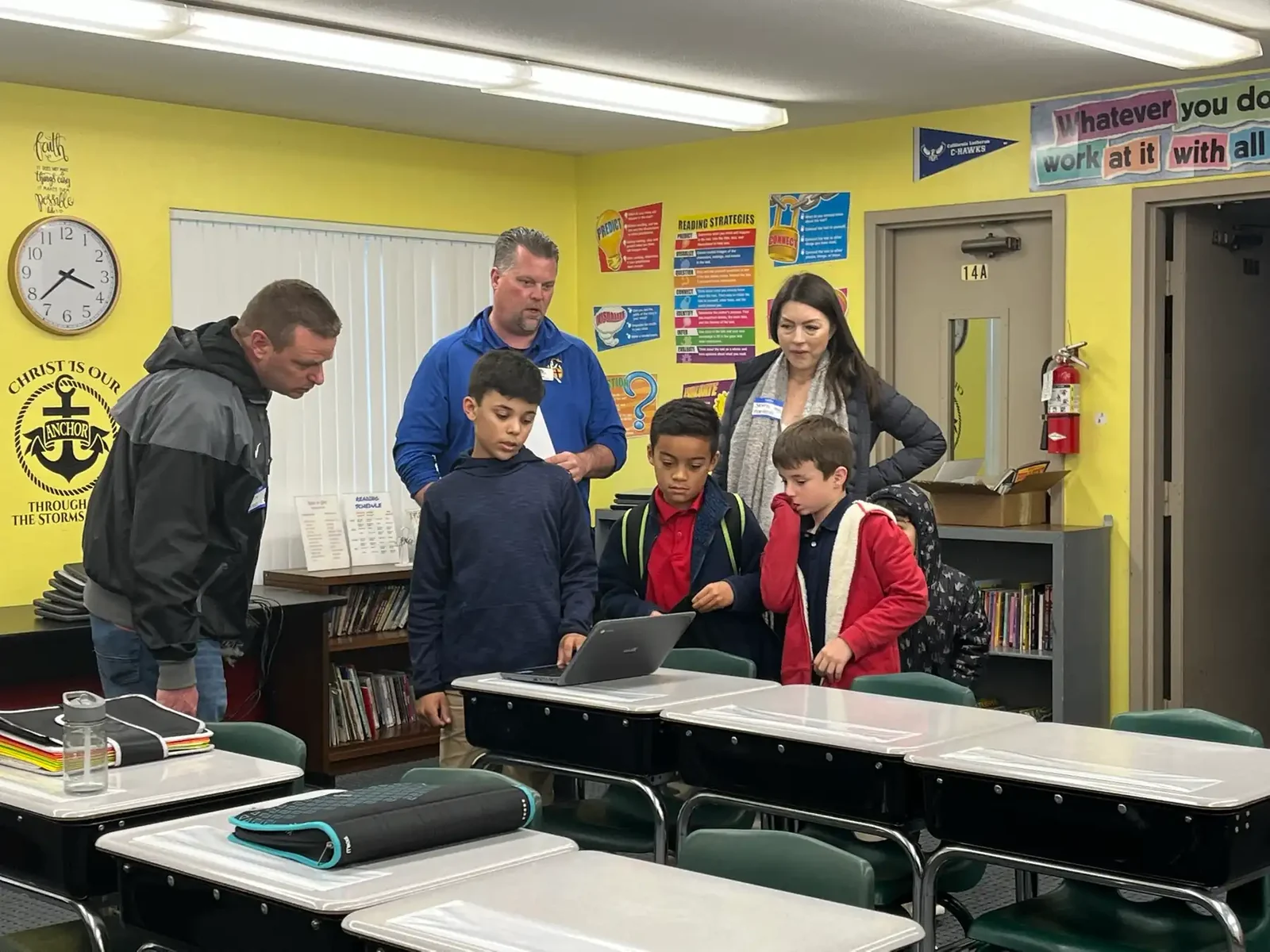
Why we teach this way
- The teacher already knows your child in year two. No September spent learning names, reading levels, and what sets a child off. The second year starts where the first ended.
- Grade-level work is differentiated by design. Small class sizes within a two or three grade room make it normal for a child to read above grade level or need extra time in math, because the room is already set up for more than one level.
- Older students model for younger ones. A second grader shows a first grader how the morning routine works. An eighth grader reads with a sixth grader. Children learn a great deal from being, in turn, the youngest and then the oldest in the room.
- Siblings often share a room. Many families have two children a grade apart, and they get the same teacher and the same classroom culture.
- A small faculty knows every child. With four classroom teachers, the whole staff can tell you something true about every student in the school, not just the ones on their roster.
What it asks of a teacher
Teaching two or three grades well is harder than teaching one, and it only works with teachers who are trained for it and supported in it. Every Reformation classroom teacher is WELS certified with a degree in elementary education, the faculty meets as a professional learning community, and student results from MAP Growth testing three times a year tell each teacher where each child is. Mr. Ross also mentors new teachers through the WELS New Teacher Induction Program.
Placement when you enroll
When a new student enrolls, the classroom teacher meets with the child and may do a short placement activity so the student starts at the right level in reading and math, not just the right grade. Transfers in the middle of the year are common here, especially for military families, and the room is already built to absorb a new level.
Common questions
Does my child get the full curriculum for their grade?
Yes. Each grade follows its own grade-level curriculum in the core subjects. The grades share the parts of the day that aren't grade-specific, such as devotions, music, art, Spanish, PE, and chapel, and split for grade-level instruction in reading and math.
Will an advanced student be held back by younger classmates?
The opposite tends to happen. Because the room already runs at more than one level, a strong second grader can work with third grade material without leaving the room or waiting for a special program. Older students also grow by explaining what they know to younger ones.
Will a younger student be overwhelmed by older ones?
The younger students in each room are learning the routines from classmates who did the same thing a year earlier, with a teacher watching closely. Most families tell us the youngest child in a room settles in faster than they expected.
How are the TK and kindergarten students grouped?
Transitional kindergarten and kindergarten share a room and a teacher, Mrs. Buth, with instruction matched to each child's level. Details are on the transitional kindergarten and kindergarten page.